Key Takeaways
- The quality of your tart pan directly affects crust texture and color, and even a perfect recipe can fail if the pan traps steam or heats unevenly.
- Well-built stainless steel, carbon steel, or aluminum pans distribute heat more evenly, resist warping, and deliver more consistent baking results than flimsy alternatives.
- Perforated tart pans solve the most common baking issues by allowing heat to reach the crust directly while releasing steam as it forms.
- Starting with a high-quality, perforated round tart pan covers most recipes, with specialty sizes added over time.
You have followed a tart recipe perfectly. You re-read the instructions and painstakingly measured, but the crust came out soggy, pale, and unevenly baked. The issue isn't your technique. It's your pan.
Not all tart pans are the same, and small differences, like perforation, matter more than most home bakers realize.
This guide covers what features to look for in tart pans, how different materials perform, and why perforated technology produces consistently better results.
What Makes a Great Tart Pan
A great tart pan delivers three things: even baking, easy release, and a crispy, golden crust. The way this is accomplished is complicated.
Many features work together to make an excellent tart pan, but the best tart pans make it easy to achieve consistent, professional results at home.
- Material Matters: Like all pans, the material affects heat conductivity, durability, and how the crust bakes.
- Construction Quality: Flimsy pans warp and create hot spots, so bakers need well-designed pans that distribute heat evenly.
- Shape and Depth: Classic round, rectangular, square, and specialty shapes serve different purposes.
- Removable Bottom: Removable bottoms make serving easier and help determine whether the tart is cooked through, but they are also harder to master.
- Size Considerations: Individual tartlets (3-4"), standard tarts (8-10"), and large tarts (11"+) are all used for different occasions and recipes.
Best Tart Pan Materials: Steel, Aluminum, and Beyond
Material matters. These are the most common materials for tart pans.
Stainless Steel Tart Pans
Stainless steel won’t warp, rust, or degrade. It’s a long-term investment that tends to perform for years and years.
- Pros: Extremely durable, dishwasher-safe, doesn't react with acidic fillings, and maintains shape over time.
- Heat Performance: Conducts heat well when properly constructed with heavy-gauge steel.
- Best For: Bakers who want professional-quality pans that last for decades.
Carbon Steel Tart Pans
A carbon steel pan requires more maintenance than a stainless one, but it’s a little easier to achieve superior crust browning.
- Pros: Excellent heat conductivity, naturally non-stick when properly seasoned, and oven-safe to very high temperatures.
- Heat Performance: Heats quickly and evenly, produces exceptional browning.
- Best For: Bakers comfortable with seasoning and maintaining carbon steel, a process similar to that for cast iron.
Aluminum Tart Pans
Aluminum pans are less durable than all-steel options and can warp over time. These pans are not long-lasting heritage pieces that can be used for decades.
- Pros: Lightweight, by far the most affordable option, and conducts heat well
- Heat Performance: Heats quickly and relatively evenly, but can create hot spots if too thin.
- Best For: Occasional bakers, those who are curious about the tart-making process, or those on a budget
Non-stick Coated Pans
In all non-stick pans, the coating will degrade over time and, depending on the construction, may not tolerate high oven temperatures.
- Pros: Easy release and no greasing or pan preparation required
- Heat Performance: Varies depending on base material.
- Best For: Delicate tarts where sticking is a major concern, or for bakers who are just starting out
The Perforated Pan Advantage: Why Micro-Perforations Matter
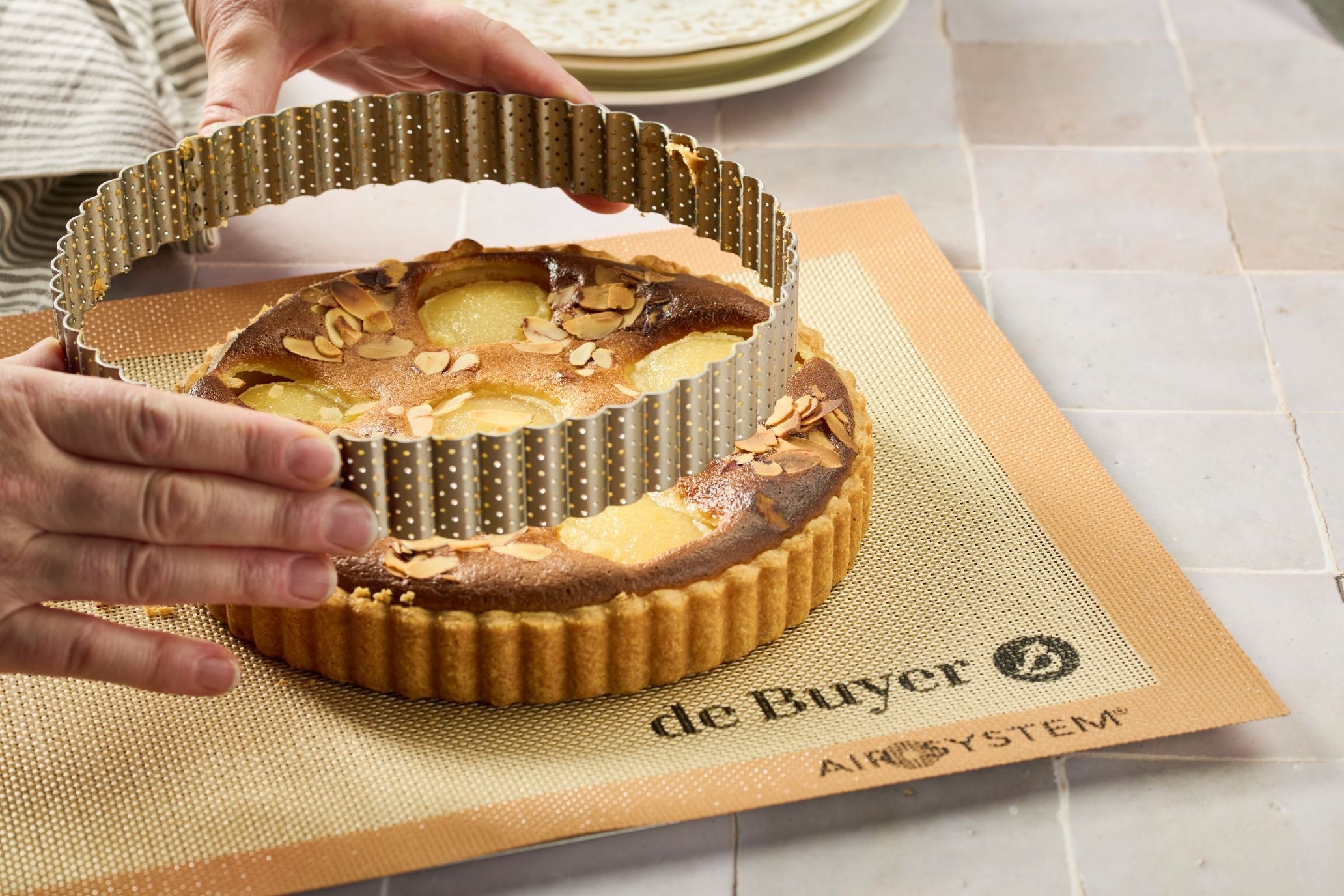
Traditional solid tart pans trap steam between the crust and the pan. This, along with a poor recipe, is the root cause of soggy bottoms. Tiny holes allow heat to reach the crust directly while releasing steam as it forms.
The consistent airflow gives you a crispy, evenly golden crust from edge to center. The crust browns uniformly, not just on exposed edges.
This baking method works for all kinds of tarts, including custard tarts, fruit tarts, and quiches, but it is especially well-suited to blind baking. The holes prevent the crust from puffing up and allow for blind baking without pie weights.
de Buyer's Air System includes tart rings, molds, baking sheets, and more, engineered with advanced micro-perforation technology. These tiny perforations deliver consistently crisp results without drying out your bakes.
Choosing the Right Size Tart Pan
There are several tart pan sizes to choose from, each serving a different purpose. Tart pan height tends to be more consistent. Mini tart pans are often 1.4 to 2” high, while standard tart pans are typically 0.8” high.
Here are the size and shape options.
- Individual tartlets (2-4" diameter) are perfect finger food or portions for one to two people.
- Medium tarts (5-7”) are excellent for a small group of three to four.
- Standard tarts (8-10" diameter) are the chosen size for most recipes and serve six to eight people.
- Large tarts (11-14" diameter) are used for entertaining large groups or impressive presentations.
- Specialty sizes like rectangle, calisson, oblong, and square are all usable as tart pans as well as quiches, candy, and more.
Start with the essentials and add specialty shapes as you expand your baking repertoire. Here’s what you need to know.
- The Foundation: One 9.5" perforated round tart ring handles most recipes
- Next Additions: Set of individual tartlet rings and rectangular tart pan for elegant presentations
- For Enthusiasts: Start acquiring your specialty shapes and trying out new recipes
- Don't Forget: Pair your perforated rings with a perforated silicone baking mat over a baking sheet and a cooling rack for proper cooling
- Quality Over Quantity: Well-constructed tart and pastry rings outperform cheap pans every single time
How to Use Tart Pans for Perfect Results
Most recipes require bakers to chill the dough while preparing the tart pan.
- Preparing the Pan: Perforated pans may need less greasing due to the smaller surface area, but you will still need to butter the pan
- Pairing With Baking Mats: Perforated silicone baking mats work well with tart rings
- Rolling and Fitting the Dough: Roll circular dough to fit the bottom and then strips for the sides of the pan, gently press without stretching, and cut the excess dough off the top
- Blind Baking: Perforated pans excel here since you do not need to line with parchment or add pie weights; simply bake until the dough is set and golden brown
- Removing the Tart: For rings, lift straight up; for removable bottoms, push up from beneath
- Cleaning and Care: Stainless steel is dishwasher-safe; carbon steel needs hand washing and occasional re-seasoning
Elevate Your Tart Baking
The right tart pan can make the difference between disappointing results and bakery-quality tarts. Perforated technology solves the most common tart-baking problems: soggy bottoms, uneven browning, and pale crusts.
However, material, construction, and design all matter, so choose pans built to professional standards. de Buyer’s French-made perforated tart pans deliver the consistent, crispy results that home bakers deserve.
Ready to try your favorite tart recipes with professional equipment? Discover the difference that perforated tart pans make. Explore de Buyer's collection of French-made tart rings and bakeware designed with professional bakers in mind.


Recommended for You
-
MINERAL B PRO Carbon Steel Fry Pan
8"
9.5"
11"
12.5"
$110.00 - $175.00Regular price $110.00Regular priceUnit price per$0.00Sale price $110.00 -
MINERAL B Classic Carbon Steel Fry Pan
8"
9.5"
10.25"
11"
12.5"
14"
$75.00 - $165.00Regular price $75.00Regular priceUnit price per -
MINERAL B PRO Carbon Steel Omelette Pan
9.5"
11"
$130.00 - $145.00Regular price $130.00Regular priceUnit price per -
Protective Sleeve for Pan Handle
Default Title
$12.50 USDRegular price $12.50Regular priceUnit price per -
Blue Carbon Steel Fry Pan
8"
9.5"
10.25"
11"
12.5"
$60.00 - $95.00Regular price $60.00Regular priceUnit price per -
MINERAL B Carbon Steel Omelette Pan
8"
9.5"
11"
$85.00 - $120.00Regular price $85.00Regular priceUnit price per -
MINERAL B Carbon Steel Crepe & Tortilla Pan
9.5"
10.25"
12"
$75.00 - $100.00Regular price $75.00Regular priceUnit price per -
Blue Carbon Steel Crepe & Tortilla Pan
7"
8"
9.5"
$30.00 - $50.00Regular price $30.00Regular priceUnit price per -
MINERAL B Carbon Steel Egg & Pancake Pan
4.75"
5.5"
$50.00 - $60.00Regular price $50.00Regular priceUnit price per -
MINERAL B Carbon Steel Country Fry Pan
9.5"
11"
12.5"
$125.00 - $185.00Regular price $125.00Regular priceUnit price per -
 Sold out
B BOIS Crepe Spatula
Default Title
$10.00 USDRegular price $10.00Regular priceUnit price per -
 Sold out
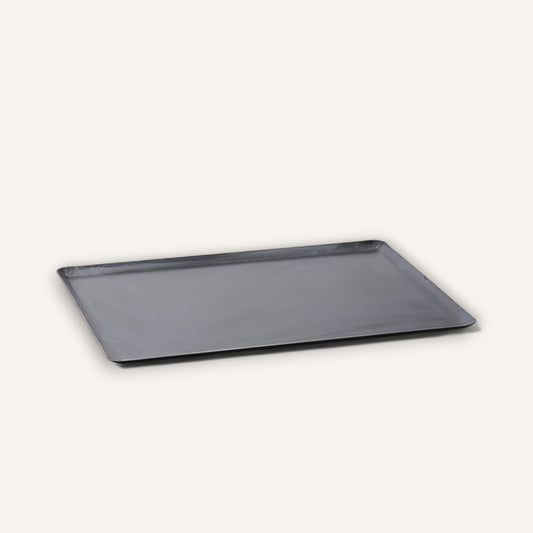
Blue Carbon Steel Baking Sheet
15.75" X 11.8"
23.6" X 15.75"
$45.00 - $55.00Regular price $45.00Regular priceUnit price per


