Key Takeaways
- High-quality kitchen utensils are essential tools of the trade that enhance cooking performance, boost efficiency, and reduce long-term replacement costs when compared to inexpensive, low-durability alternatives.
- Stainless steel offers strength and longevity, beechwood is gentle and naturally antibacterial, and silicone provides flexibility and nonstick-safe use.
- A foundational kitchen toolkit should include a spatula, whisk, tongs, ladle, and slotted spoon. Specialty tools should be added based on your cooking habits.
- To choose the best utensils, prioritize heat-resistant materials, seamless construction, and ergonomic design, and avoid plastics or low-grade silicone that degrade over time, especially if used in high-heat or dishwasher settings.
The best investment is in the tools of one's own trade. Chefs and home cooks need utensils they can trust that are designed for their needs. This article will cover essential utensils, how to choose high-quality tools, and how different materials perform in the kitchen.
The Importance of Quality Kitchen Utensils
You can get cheap kitchen utensils at any supermarket or online retailer, but many of these tools wear down and break quickly. Investing in durable, high-quality utensils can save money and frustration in the long run. Not to mention that selecting the right utensils has a significant impact on cooking performance and kitchen efficiency.
Does Utensil Material Matter?
Not all materials are created equal, and your chosen material affects durability, heat resistance, and ease of use.
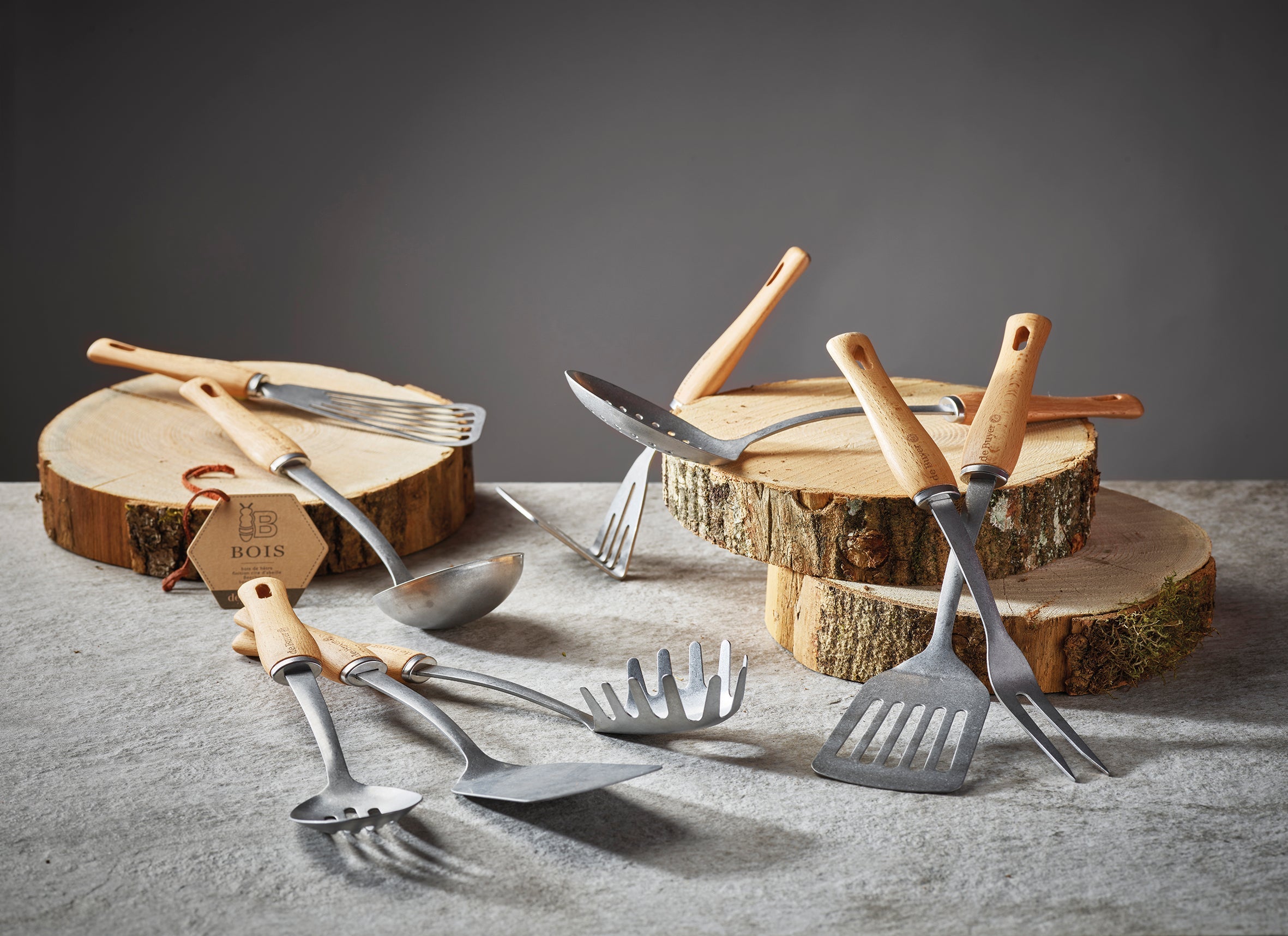
- Stainless Steel Utensils: This steel alloy is known for its durability, corrosion resistance, and suitability for high-heat cooking.
- Wooden Utensils (Beechwood): This wood is strong and durable, but known for its gentleness on cookware surfaces and natural antibacterial properties. It’s also an attractive wood that looks aesthetically pleasing in any kitchen.
- Silicone Utensils: This synthetic material is flexible, heat-resistant, and suitable for nonstick cookware.
What Are the Best Kitchen Utensils?
The following utensils are the core kitchen tools every chef or home cook needs. If you’re gathering kitchen supplies for the first time, add these to your shopping list.
- Spatula for folding, scraping, and sautéing. A plain spatula and a slotted spatula both have a place in your kitchen. Slotted spatulas are used for more delicate items.
- Whisk for batters, sauces, and emulsions. One whisk will do as long as it’s at least 8 inches long.
- Tongs for flipping, turning, and plating. Only experienced chefs and grandmothers dare to flip hot foods with their bare fingers. The rest of us mortals need durable, metal tongs.
- Ladle for soups, sauces, and stews. This is necessary for plating.
- Slotted spoon for draining and lifting. You can also get a spaghetti spoon, which helps catch and hold food.
These tools cover nearly all day-to-day cooking needs and are essential across cuisines and skill levels. However, these five kitchen utensils are only the beginning. A fully-stocked kitchen requires some specialty tools, depending on the most commonly cooked dishes. For example, any cook who regularly makes crepes will benefit from a crepe spreader.
The following items are specialty tools that you may need:
- Risotto Spoon: For incorporating liquid while stirring without breaking food.
- Corer: For removing the core from fruits and vegetables.
- Offset spatula: For smoothing and spreading.
- Dough scraper: For moving large doughs.
- Shears: For cutting meats, shells, and other tough foods.
Top Kitchen Utensil Picks
We’ve reviewed the best of the best and assembled our top picks right here. These are our preferred choices for your essential kitchen tools, as well as some specialty tools you can’t miss.
|
Tool |
Essential or Specialty |
Materials |
Review |
|
Essential |
Stainless steel and beechwood |
The plain spatula is balanced in the hand and especially helpful for stovetop cooking that requires precision and strength, like stirring risotto or lifting heavier ingredients. The wood handle stays cool, even when resting near the edge of a hot pan, and offers a comfortable grip. While it’s not safe for nonstick cookware, its performance with stainless steel and cast iron pans is unparalleled. It is handwash-only, but cleanup on a 13.8" spatula doesn't take long. |
|
|
Essential |
Stainless steel and beechwood |
Similar construction and function to the plain spatula, but the slotted version weighs even less for ergonomic handling. The stonewashed stainless steel spatula blade is strong enough to handle heavy foods without bending, even with the slotted perforations. It’s hand-wash only. |
|
|
Essential |
Stainless steel and polypropylene with TPE coating |
The Göma whisk's stainless steel wires extend through the entire handle, giving it unmatched stability when working through thick batters and dense sauces. The anti-slip, TPE-coated handle provides a secure and natural grip, even when your hands are wet, and stays comfortable after prolonged use. The range of available sizes (from 8" to 13.75") makes it easy to pick the right whisk for any task—from whisking eggs in a small skillet to aerating a large bowl of pancake batter. This whisk is rust-resistant, dishwasher safe, sterilizable, and ultimately a low-maintenance tool designed for long-term use. |
|
|
Essential |
Stainless steel and beechwood |
The stonewashed stainless steel enables the ladle to withstand high temperatures while giving it a vintage look. This utensil can sit in a bubbling stew for hours without overheating. Notably, it holds enough liquid to be an effective scoop. It’s hand-wash only. |
|
|
Essential |
Stainless steel and beechwood |
The stainless steel construction handles high-heat cooking tasks with ease, from skimming vegetables out of boiling water to lifting fried eggs from oil. The slotted bowl efficiently drains liquids without sacrificing surface area, and at just 0.2 lbs, it feels balanced and lightweight without feeling flimsy. It’s hand-wash only. |
|
|
Specialty |
Silicone |
The thick, flexible bristles are made from high-quality, heat-resistant silicone, which retains more liquid per dip and applies glazes and marinades evenly. The brush doesn't shed or melt under high heat and disassembles easily for a hygienic clean. It's dishwasher-safe, sterilizable, and compact enough to store easily in any utensil drawer. |
|
|
Specialty |
Stainless steel and polypropylene |
This mandoline allows you to quickly, safely, and efficiently cut extra-fine slices from 0.2 mm to 5 mm. It has an ergonomic handle, which is necessary for long slicing sessions. The blade is sharp enough to cut cleanly without crushing, and the extra-large knob helps protect your fingers and palm when slicing. |
Key Tips for Choosing Quality Kitchen Utensils
There’s more to choosing kitchen tools than just picking the right material and type of utensil. Use these tips to help you when building your kitchen.
- Choose heat-resistant materials like stainless steel, natural wood, or reinforced silicone.
- Look for well-balanced, ergonomic handles that offer comfort and control.
- Prioritize seamless construction, including noncoated cookware (fewer parts = less breakage, easier to clean).
- Avoid plastic and low-grade silicone that can warp or break down over time.
- Consider what tools can go in the dishwasher and your typical dishwasher habits.
- Pick utensils that match your cookware (silicone or wood on nonstick pans).
The Right Tool Makes Every Meal Better
The better the utensil, the better the dish. Select kitchen tools made from high-quality materials and designed with performance in mind. de Buyer has an extensive range of professional-grade cooking utensils crafted for chefs and home cooks alike. Explore the essential and specialty options and elevate your kitchen today.


Recommended for You
-
MINERAL B PRO Carbon Steel Fry Pan
8"
9.5"
11"
12.5"
$100.00 - $160.00
Sale Sold outRegular price $75.00 $100.00Regular priceUnit price per$0.00Sale price $100.00 -
MINERAL B Classic Carbon Steel Fry Pan
8"
9.5"
10.25"
11"
12.5"
14"
$65.00 - $155.00
Regular price $65.00Regular priceUnit price per -
MINERAL B PRO Carbon Steel Omelette Pan
9.5"
11"
$120.00 - $135.00
Sale Sold outRegular price $90.00 $120.00Regular priceUnit price per -
MINERAL B Carbon Steel Omelette Pan
8"
9.5"
11"
$75.00 - $110.00
Regular price $75.00Regular priceUnit price per -
Blue Carbon Steel Fry Pan
8"
9.5"
10.25"
11"
12.5"
$50.00 - $85.00
Regular price $50.00Regular priceUnit price per -
Protective Sleeve for Pan Handle
Default Title
$12.50 - $12.50
Regular price $12.50Regular priceUnit price per -
MINERAL B Carbon Steel Crepe & Tortilla Pan
9.5"
10.25"
12"
$65.00 - $90.00
Regular price $65.00Regular priceUnit price per -
Blue Carbon Steel Crepe & Tortilla Pan
7"
8"
9.5"
$25.00 - $45.00
Regular price $25.00Regular priceUnit price per -
MINERAL B Carbon Steel Country Fry Pan
9.5"
11"
12.5"
$110.00 - $170.00
Regular price $110.00Regular priceUnit price per -
MINERAL B Carbon Steel Egg & Pancake Pan
4.75"
5.5"
$40.00 - $50.00
Regular price $40.00Regular priceUnit price per -
Blue Carbon Steel Baking Sheet
15.75" X 11.8"
23.6" X 15.75"
$40.00 - $45.00
Regular price $40.00Regular priceUnit price per -
B BOIS Crepe Spatula
Default Title
$8.00 - $8.00
Regular price $8.00Regular priceUnit price per